

Maud Kotasová
Before Maud Kotasová threads a needle through sheet metal, she picks up a drill. In her work, embroidery finds its way onto car parts, metal lockers and the walls of a container. She brings text and traces of human stories to hard objects, many of them already used. The Brno-based artist and volunteer with Brno pro Ukrajinu studied in the Printmaking and Environment studios at the Faculty of Fine Arts, Brno University of Technology. She later completed teacher training at Masaryk University to teach vocational subjects at secondary schools.
In Bucharest in 2022, she turned a metal container into the installation Hell Is a Material, embroidering scenes of hell from church frescoes onto its walls. Two years later, her exhibition The Darkness We Talk From at the Brno House of Arts featured objects drawing on the world of factory workers. Last year’s exhibition Živý nás nedostanou at Prague’s Pragovka continued her work with found objects and embroidered texts. This year, her work was part of the international exhibition States of Uncertain Domesticities at Rome’s Museo Carlo Bilotti.
Her art and volunteering also came together in a public programme: in October 2024, the Brno exhibition was accompanied by a joint session weaving camouflage nets for Ukrainian soldiers.
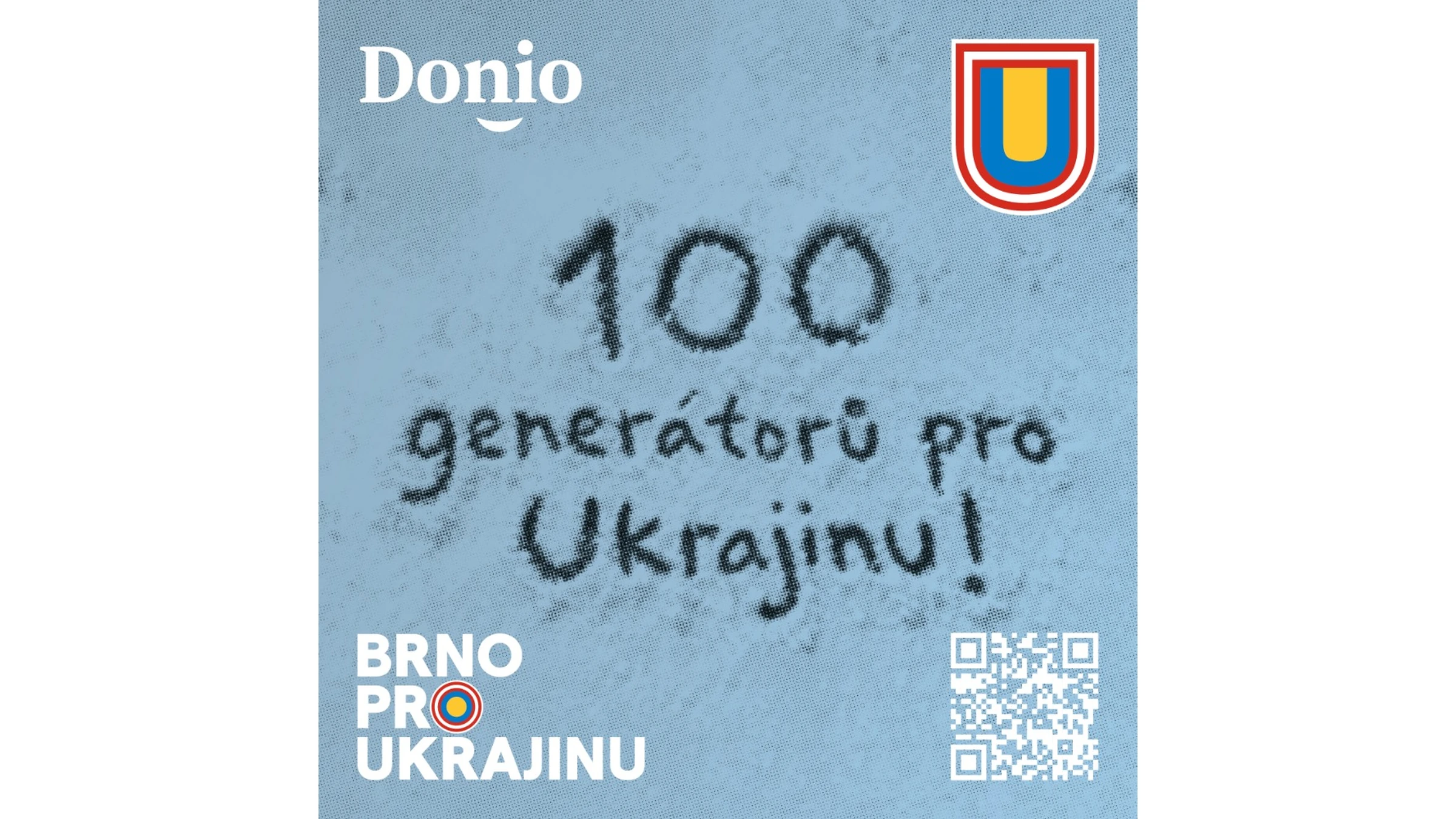
She is now organising a winter fundraiser for power supplies with Brno pro Ukrajinu. The civic initiative was founded on 24 February 2022, the day Russia launched its full-scale invasion. Since January 2023, its aid has also gone directly to Ukraine. This year’s Winter is coming campaign aims to provide a hundred generators; it is also buying portable power stations. The following written interview took place on 21 November 2026.
Kryštof Peterka asks the questions. Maud Kotasová answers.
Brno pro Ukrajinu and requests that struggle to make an impression
Which message from a civilian recipient this year would you show a donor to help them picture the difference the aid made to someone’s ordinary day?
People like you are our hope for peace.
On Czech Radio in 2024, you described the shift from spontaneous collections to aid based on specific needs. What did you have to start saying differently to donors so they would buy what people on the ground were actually asking for?
I’m terribly sorry, but please, I really am asking you: don’t bring any more clothes. Please take them back.
Anyone can buy a bandage, Paralen or a sleeping bag. That’s the ideal kind of material aid.
If you can support only one of two comparable civilian requests in a single round, what ultimately decides it for you? One case you’ve already dealt with is enough.
We tend to try to give everyone at least some of the equipment they need. Usually I tell myself: I have to work harder. What haven’t I tried yet that would let both recipients get it? For me personally, what matters is whether they belong to a vulnerable group that can’t help itself. Caring for evacuated psychiatric patients and people with intellectual disabilities, for example, saves lives, even if it isn’t so sexy from a fundraising perspective.
How do you recognise an equally urgent request from an organisation that can’t write it as convincingly as more experienced applicants?
I actually don’t like polished, professional applications. The ones put together on the fly speak to me more. We want to help vulnerable people who don’t know how to navigate the system, and so still have nothing and are freezing. On the other hand, working with a professional organisation, for instance one linked to a regional council with access to a database of people in need, is good too. Without them, we wouldn’t have been able to identify, for example, families who lost their homes in an air strike, families of people with disabilities, foster families, or families of veterans with multiple amputations in desperate circumstances. Of course we check applicants. We get scams too.
When was the last time a conversation with a civilian recipient changed your initial idea of what would help them, before you made the purchase?
People often contact you knowing that what’s on offer is generators and portable power stations, but they still try to get something completely different that they need most at that moment. Look, a nonprofit, let’s give it a go. They do it because they have no other option. We deal with those cases individually.
Donations that are hard to turn down
When someone offers a donation of goods, what do you clarify with them about responsibility for it after handover, before you accept?
If someone offers goods, the donor knows whether they’ll go to a school or a hospital, for example. With corporate donors, we then try to document that their donation really reached its destination, without details, of course. At hospitals, for instance, any photographic documentation is a problem. They’re not allowed to take pictures because it’s a strategic site.
The donation agreement also states that the donation must be used in accordance with the purpose of humanitarian aid.
Once we were given a guitar and a set of knives. If you don’t get it, neither did we. The man simply handed them to a colleague, just in case, and she couldn’t bring herself to object. Then he tried to get the knives back out of us, saying he hadn’t realised they could kill someone. We hadn’t even wanted them. You can’t take them across the border anyway; they would probably have been used for cutting cables. We just let it go and tried to return them. Except the knives really did end up in a workshop, cutting cables.
The autumn appeal lists both purchasing and transport as expenses. In one completed civilian fundraiser, what other cost only proved important once the work was under way?
Probably Nova Poshta, but actually nothing we hadn’t really anticipated. When someone asks for something small, we minimise the cost of our own transport and send it by Nova Poshta from within Ukraine. But we don’t dwell on it that much. If necessary, we pay for it ourselves. We pay other travel costs ourselves too.
The autumn fundraising appeal has several groups of recipients. What summary figure would you put in the public accounts so a donor could see what share of the expenses went on civilian aid?
Of course I keep records, and we’ll account for everything properly afterwards. It’s ¾ of the expenses. On the other hand, I can’t resist pointing out that if the army weren’t being helped, you’d have no one left to help. Civilians would die without the soldiers’ protection.
What detail of a recipient’s story would you leave out of a public update, even if it would best explain to donors why that person needed help?
We always ask recipients and agree with them on what we can publish. Sometimes faces, sometimes the location. The requirements can vary.
Apart from donating money, how can a municipality help with a fundraiser like this in a way that a group of volunteers would struggle to manage on its own?
A community can do more. But yes, it’s about money. If a municipality decides to sponsor a particular generator for a particular recipient with particular needs, a lovely bond can grow out of it.
What can be checked and what not to promise
After handing over a donation, how would you check that it was being used for the purpose you agreed with the recipient?
We’re a small organisation and we have control over the whole process. We have our own vetted contacts. You simply see the generator there powering the boiler room when you come back. Aid being stolen is a myth we have to live with. The dilemma of whether to help only civilians and not the army is, to some extent, an artificial problem. A donor will sometimes say they want their donation used solely for civilian purposes. We respect that. Most of our recipients are in the civilian sector. But I repeat: if the army weren’t being helped, you’d have no one left to help. Civilians would die without their protection.
What would you need to learn after the winter to decide not to offer the same kind of civilian donation again?
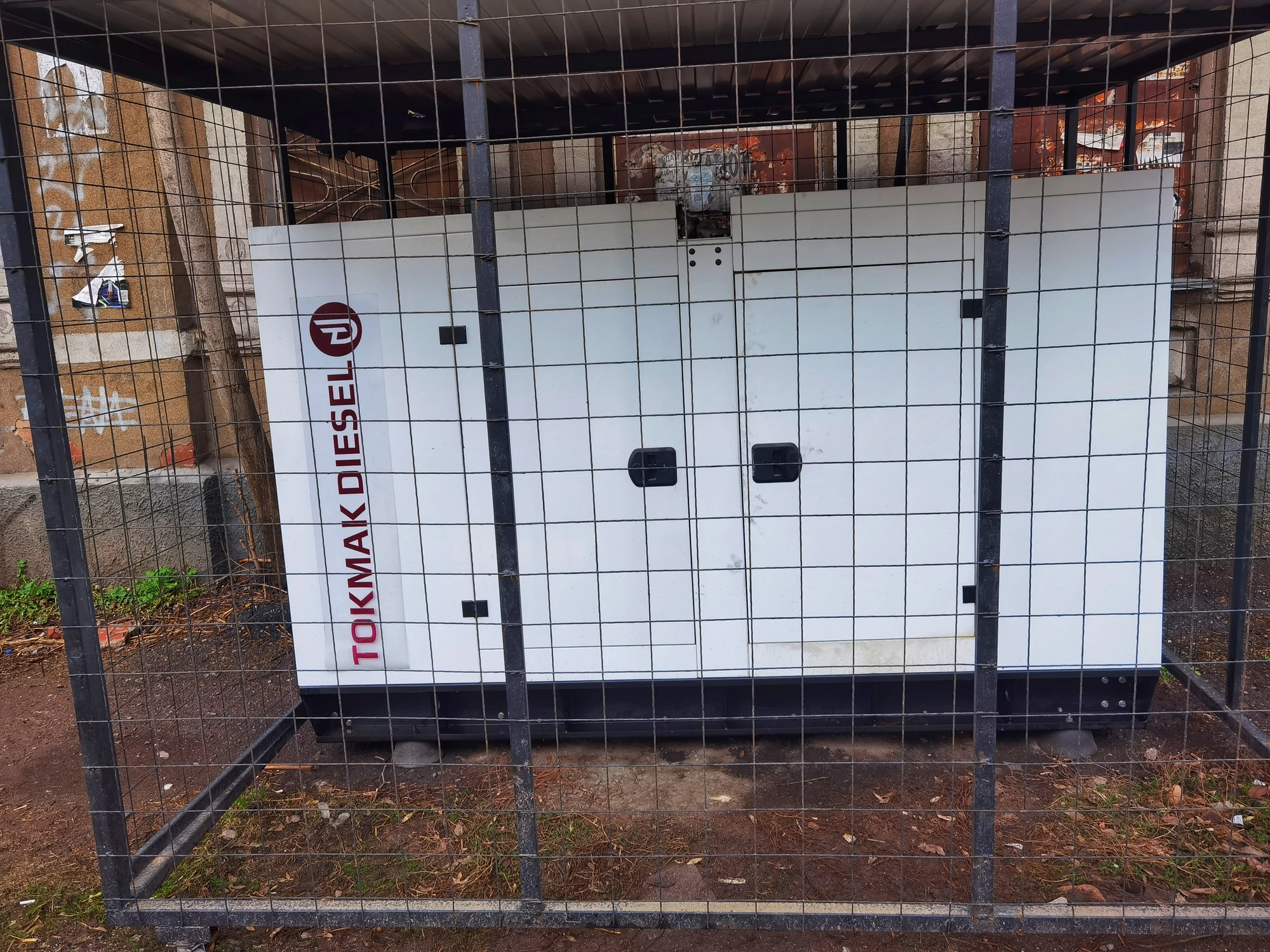
Perhaps you mean being told a product is poor quality? There isn’t time for that to happen. You can’t flee with a 150 kg generator. It simply keeps working until it’s destroyed, sometimes by an enemy missile or drone. You already know that diesel doesn’t explode, or that you get more power out of a single-phase generator.
What would you like to be able to promise someone whose request for necessary help can’t be covered by this year’s appeal?
Never make promises. You’ll hurt them terribly. And needs change so much that next year something completely different may be needed. I deal with this often. A few times we’ve attempted something we initially thought was impossible. And it worked out. Other organisations are there for the big requests running into millions.
Further reading
- Air-raid alert: What Czechia can learn from Ukraine’s experience (in Czech)
- Prague’s shelters cannot accommodate most residents. The rest are expected to rely on improvisation (in Czech)
- ‘Russian peace’ is not the end of war. It is rule by violence (in Czech)
Sources and research
- Brno pro Ukrajinu — organisation profile
- Winter is coming! 100 generators for Ukraine — winter fundraiser
- Czech Radio Brno: an earlier interview with Maud Kotasová (2024)
- Brněnská Drbna: the winter appeal for a hundred generators (10 November 2026)
- Reflex: the current work of Brno volunteers (21 November 2026)
- Maud Kotasová — education and exhibition history
- Brno House of Arts: The Darkness We Talk From (2024)
- Pragovka Gallery: Živý nás nedostanou (2025)
- Museo Carlo Bilotti: States of Uncertain Domesticities (2026)
- ArtGraduates: Maud Kotasová’s profile and her own account of her work
- South Moravian Fire Rescue Service: the properties of diesel fuel
- NABU: investigation into suspected embezzlement of donations from abroad (27 July 2026)
- Könner & Söhnen: technical specifications for the KS 10000 E 1/3
- Könner & Söhnen: output, load and different generator models
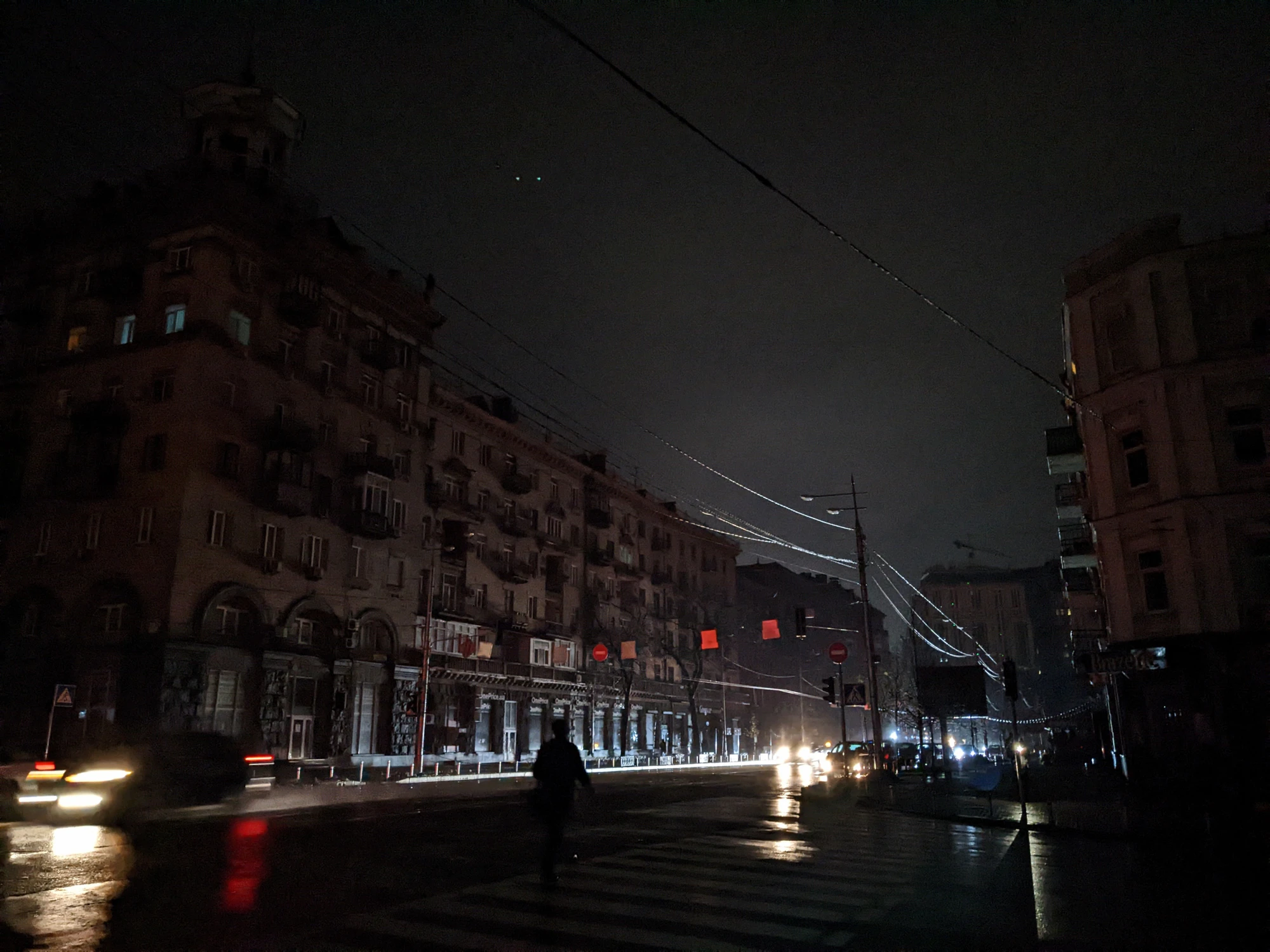
- Bektour: Kyiv during the blackout, 25 November 2022 — photograph source and licence — Photo: Bektour. CC BY 4.0. Resized and converted to WebP, without cropping.
- Alex Blokha: a Tokmak generator in Dnipro, 27 March 2026 — photograph source and licence — Photo: Alex Blokha. CC BY-SA 4.0. Resized and converted to WebP, without cropping.
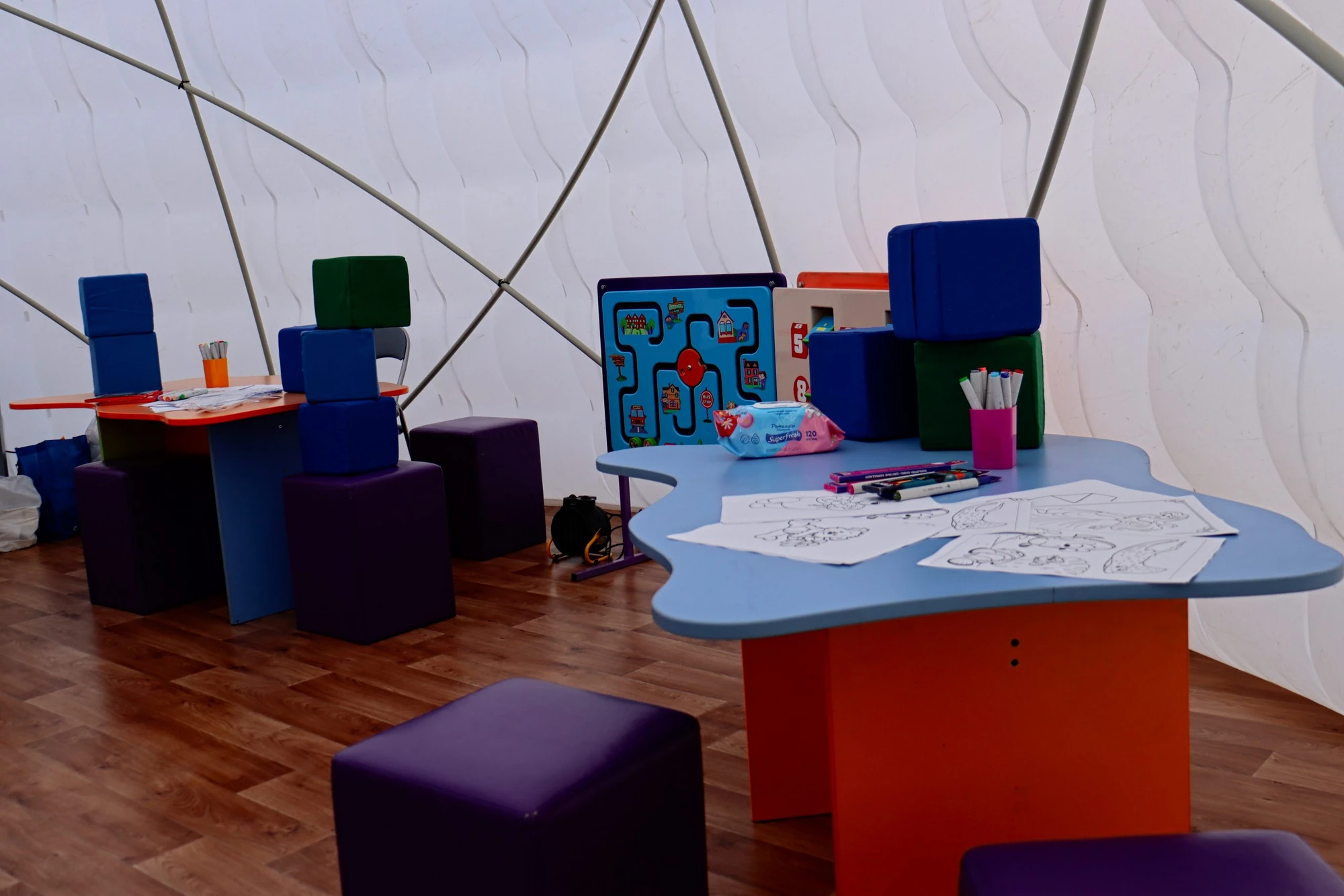
- Borshchahivka Village Council: an Invincibility Point, January 2023 — photograph source and licence — Photo: Борщагівська сільська рада. CC BY 4.0. Resized and converted to WebP, without cropping.
- Creative Commons CC BY 4.0 — terms for the reproduced photographs
- Creative Commons CC BY-SA 4.0 — licence for the generator photograph
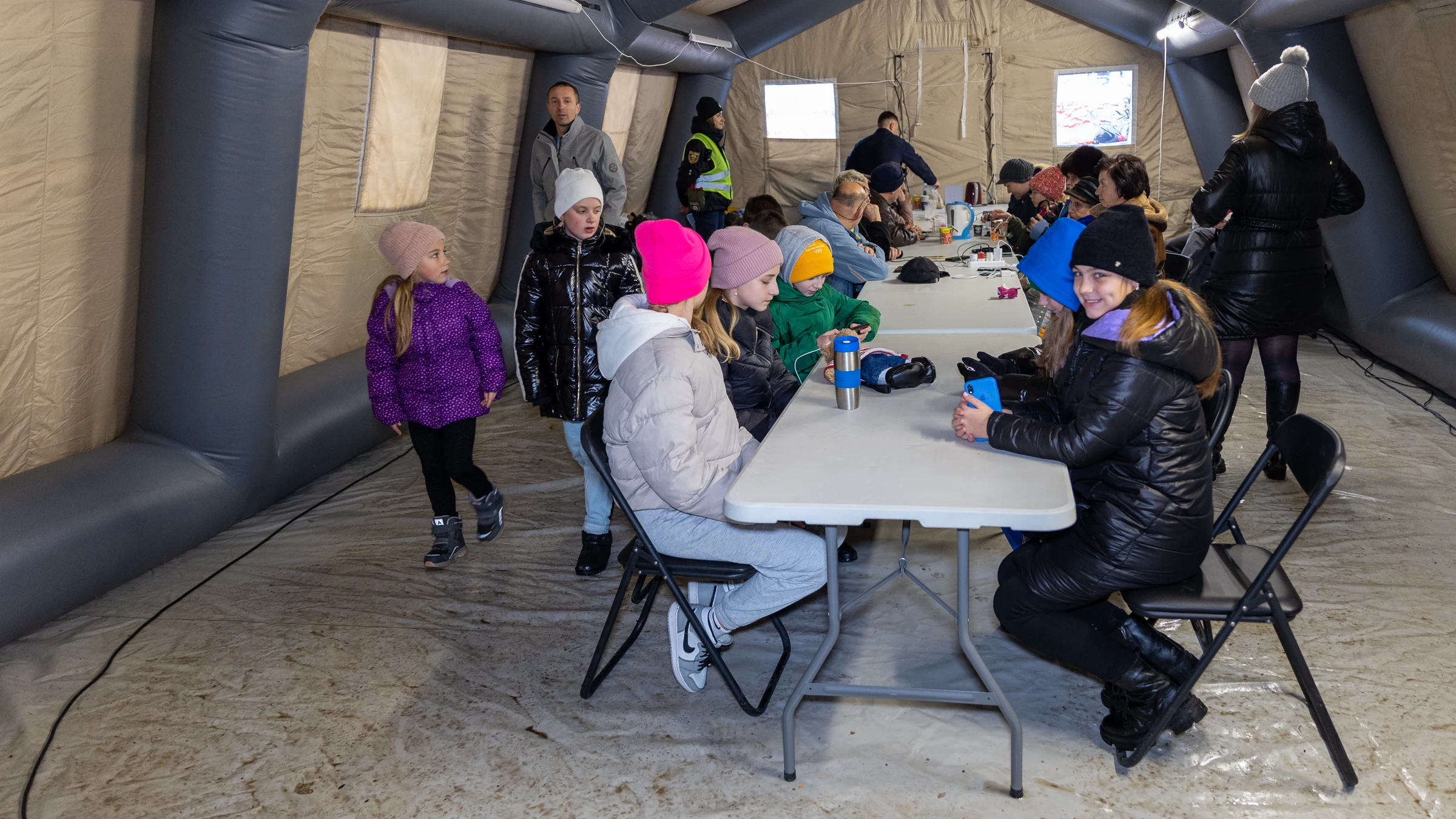
- Odapresste: an Invincibility Point in the Ternopil region, November 2022 — source of the lead photograph — Photo: Odapresste. CC BY-SA 4.0. Cropped to 16:9, resized and converted to WebP.